
Modern tensile membrane structures are rapidly transforming the way architects design public spaces. In this project, SkyTensile explored how ETFE membrane technology and innovative tensile design can be applied to create a unique, landmark-level structure inspired by the natural form of a morning glory flower.
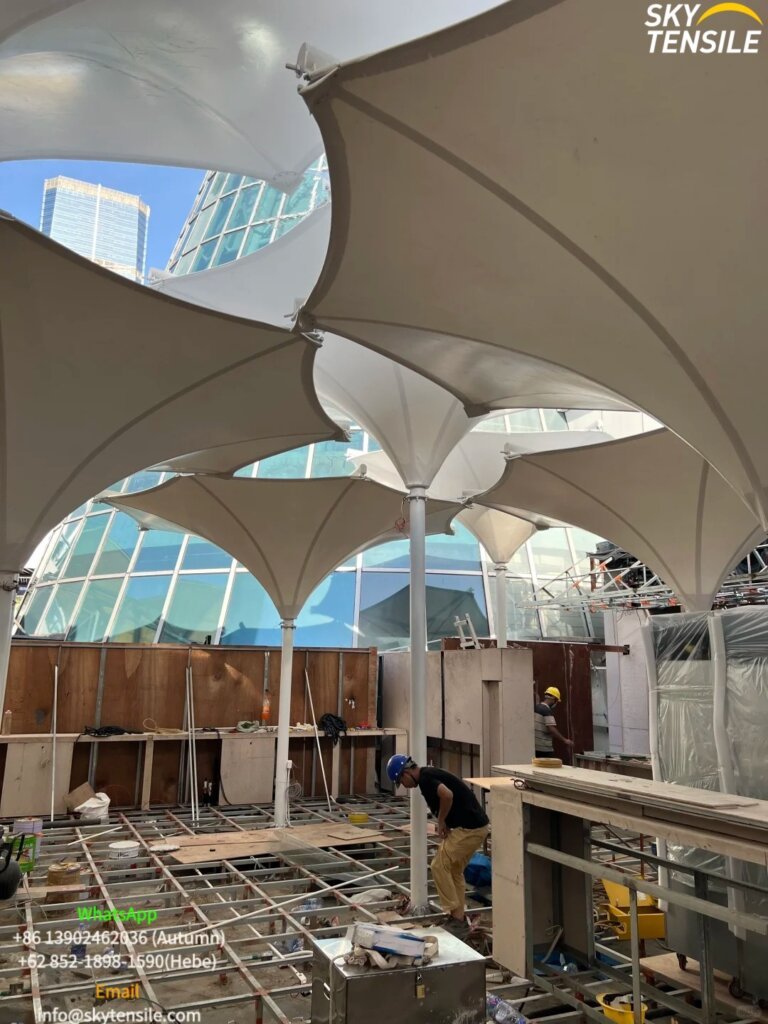
1. Biomimicry + Tensile Engineering: From Concept to Reality
The canopy was designed using biomimetic principles, taking the “flower” as the core geometric concept. Throughout the design phase, the team conducted continuous shape simulation, structural analysis, and form-finding studies to ensure that the tensioned membrane surface achieved both visual elegance and structural stability.
During construction, our designers remained on-site to supervise every detail—ensuring the final result truly matched the original architectural intention.
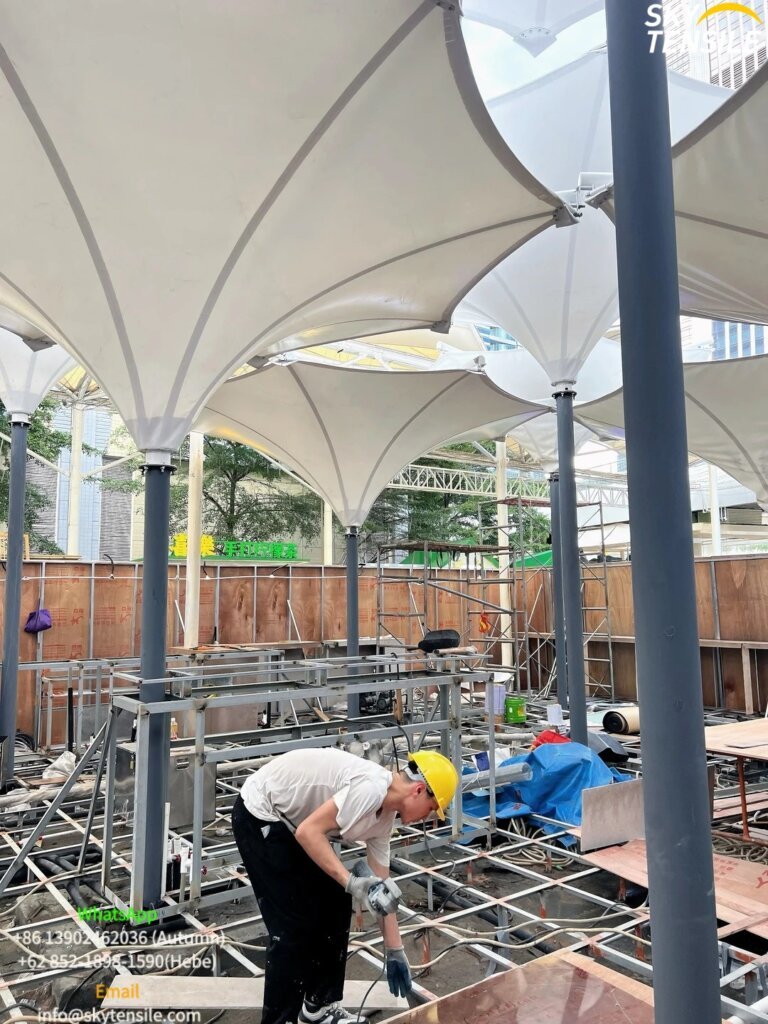
2. Why We Chose High-Strength 8000N ETFE Membrane Material
ETFE (Ethylene Tetrafluoroethylene) is one of the most advanced architectural membrane materials available today. Compared with traditional PVC or PTFE, ETFE provides:
- Extreme tensile and tear strength (8000N-grade performance)
- Outstanding durability and weather resistance
- Ultra-lightweight but structurally robust characteristics
- Superior optical and thermal performance
- Exceptional self-cleaning surface coating that reduces dirt adhesion
These features make ETFE ideal for large-span tensile membrane structures, canopies, stadium roofing, landscape shading, and iconic public installations.
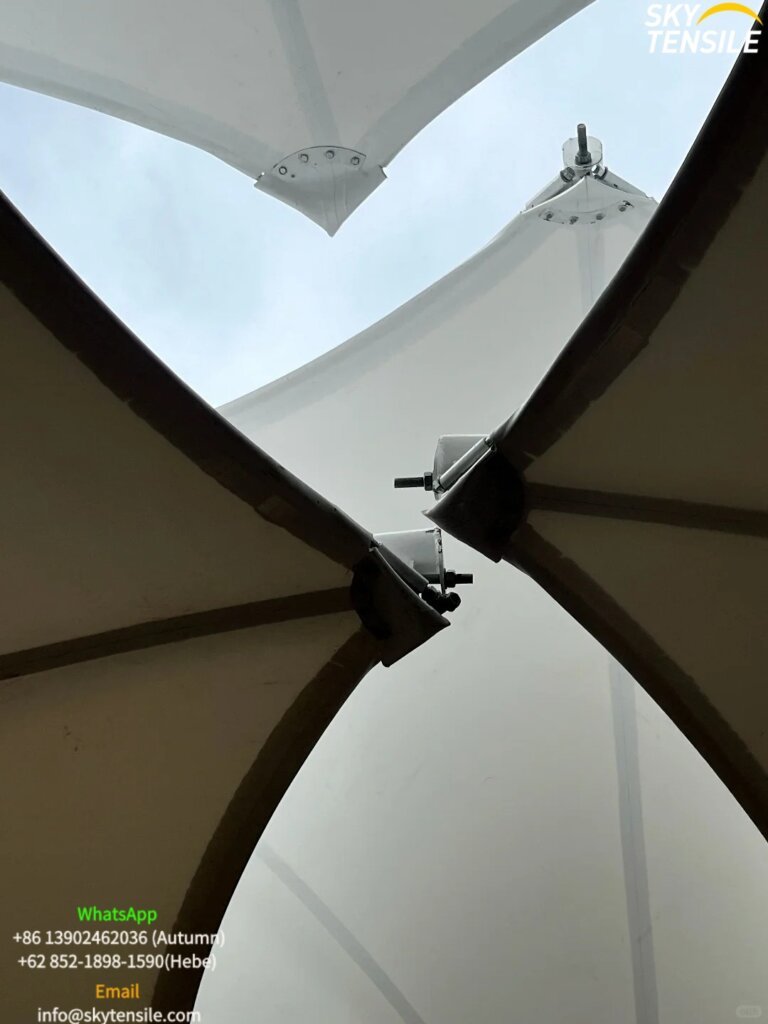
3. Long-term Performance & Low Maintenance Advantages
Thanks to its built-in self-cleaning fluorine coating, the membrane keeps surfaces clear through natural rain washing. This significantly:
- Extends the structure’s service life
- Reduces cleaning frequency
- Lowers total lifecycle maintenance cost
For public projects such as plazas, parks, and commercial plazas, this is a major advantage in sustainability.
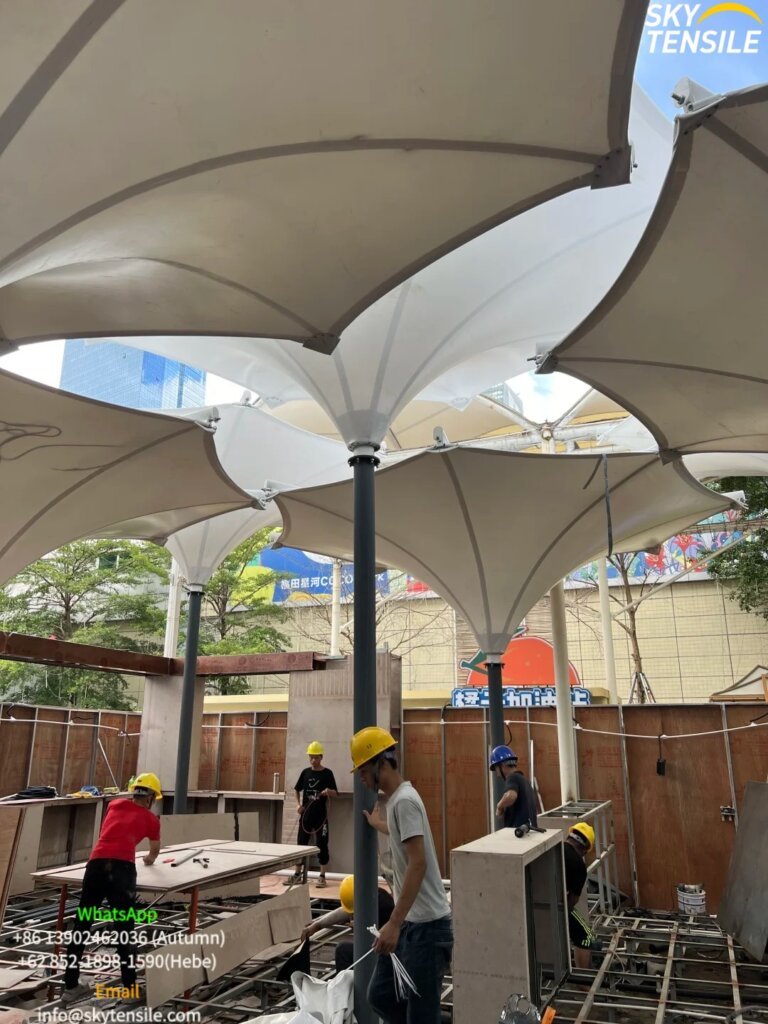
4. Creating a Modern Urban Landmark
With its sculptural form and lightweight tensile expression, the structure has become a distinctive “city flower” and a popular check-in spot. It demonstrates how membrane architecture can go beyond functionality—becoming art, identity, and a cultural symbol.