Beyond Aesthetics
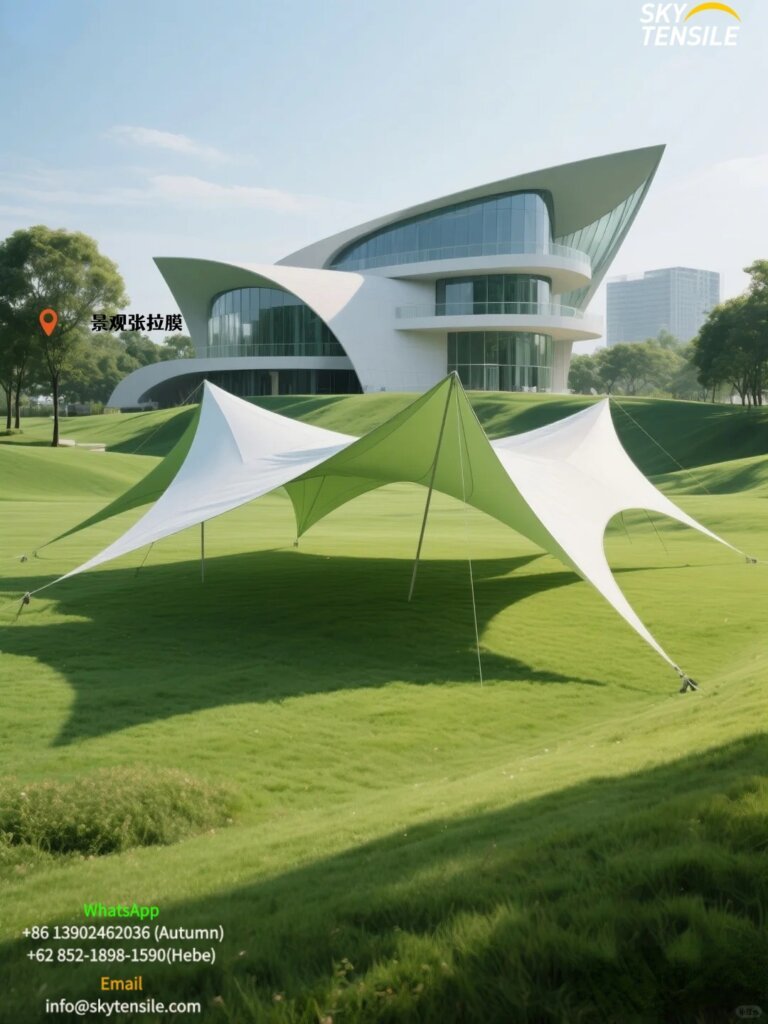
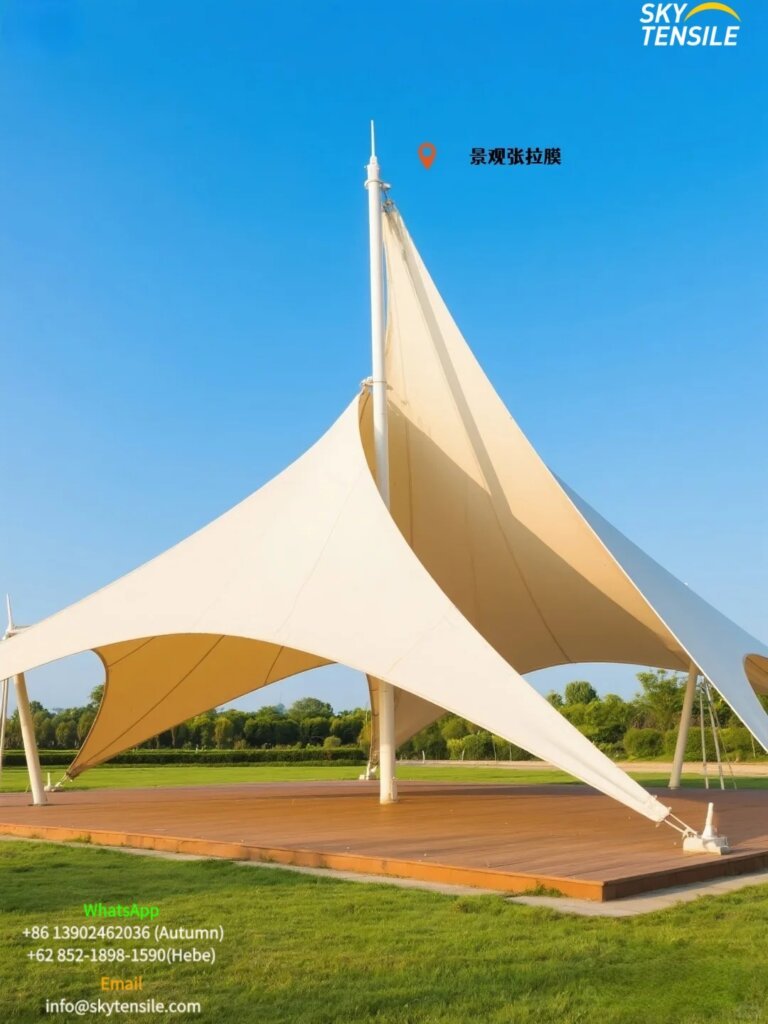
In today’s rapidly evolving urban spaces, landscape membrane structures have transcended their role as simple shading solutions. They are now central to modern urban design, recognized not only for their eye-catching, fluid shapes but also for their outstanding structural performance and eco-friendly advantages. At SkyTensile, we see these structures as a fusion of artistic expression and engineering precision.
Versatile Applications of Architectural Membranes
Where can you see high-performance tensile shade structures in action? Their flexibility allows them to fit into almost any environment:
- 🏞️ Urban Parks & Plazas: From artistic installations and viewing decks to pedestrian walkways, membranes provide lightweight, weather-resistant protection while creating public art landmarks.
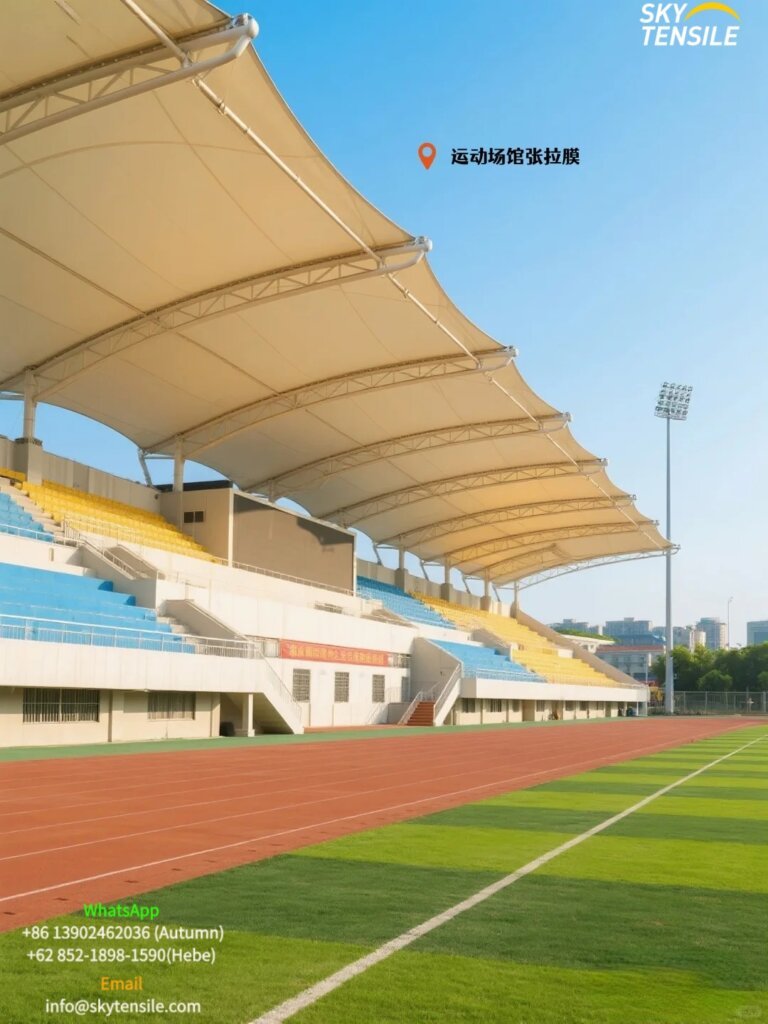
- ⚽ Sports & Athletics Venues: Beyond stadium roofing, membranes are ideal for spectator stands and outdoor sports courts, offering massive spans without the need for heavy supporting columns.
- 🏬 Commercial & Exhibition Centers: Creating stylish coverings and creative exhibition spaces that enhance the commercial value of retail complexes and plazas.
- 🚉 Transport & Infrastructure: Bus shelters, parking canopies, and toll stations benefit from the fast installation and practicality of fabric membranes, beautifying functional spaces.
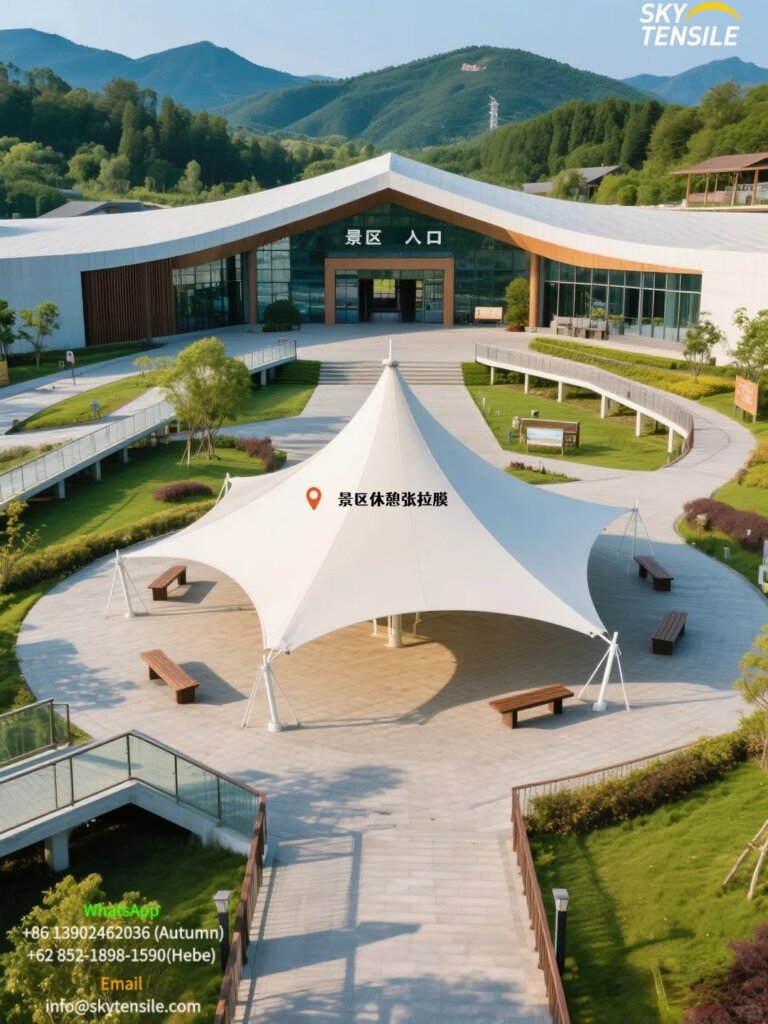
- 🎭 Culture, Education & Tourism: Providing iconic entrances for tourist attractions and resting areas for schools and theaters, ensuring comfort and aesthetic appeal.
Technical Benefits for Sustainable Cities
Why are developers and architects shifting toward tensile fabric architecture?
Design Freedom: Unlike rigid materials, membrane structures support curved forms, complex geometries, and open-air public zones.
Energy Efficiency: Translucent membranes reduce the need for artificial lighting during the day.
Sustainability: High-quality materials like PTFE and ETFE are durable and often recyclable, supporting green building goals.
👉 At SKYTensile, we’ve delivered projects across parks, stadiums, airports, and tourist attractions—showcasing how membranes transform ordinary spaces into architectural highlights.